Abstract
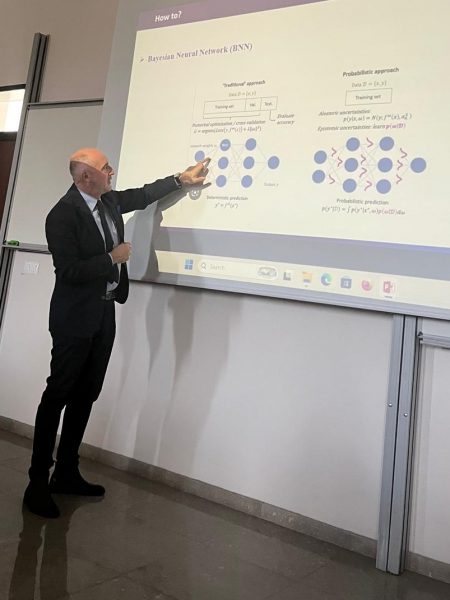
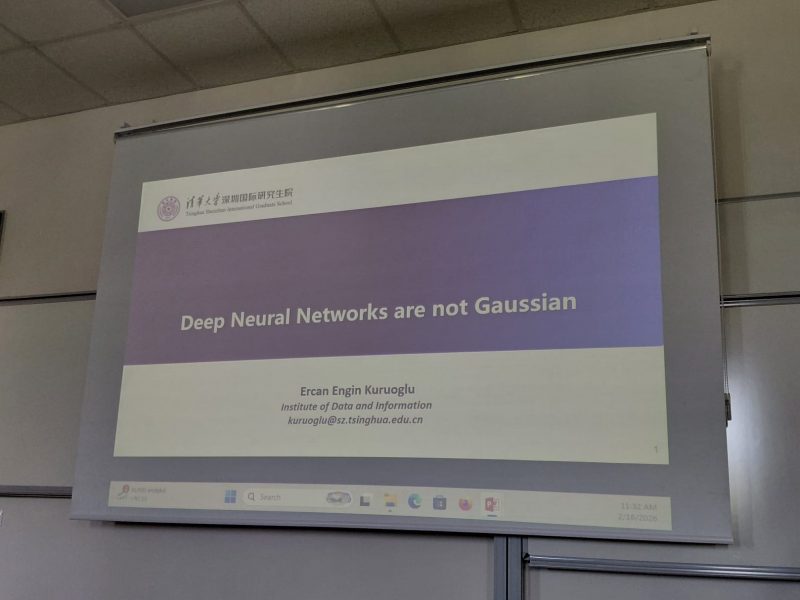
Deep learning has changed the paradigm over the last decade in analyzing and processing data. Despite the wide success of deep neural networks, they have certain shortcomings which start to become more and more critical as deep learning is being applied in more and more critical applications in industry. Limited generalization, lack of robustness to noise or attacks, lack of means for risk analysis, high computational complexity and storage requirements, inherent local optimality of the learning algorithm become important limiting factors in the usability of DNNs in critical applications. A search for solution of these problems encouraged a small proportion of AI researchers to look into the statistical formulation of deep learning rather than deterministic leading to Bayesian Neural Networks. In this community, it has been widely assumed that BNNs follow Gaussian statistics and the methodologies have been developed accordingly. We challenge this view and present experimental results that demonstrate the presence of Levy-stable laws in neural networks. We present new methodology we developed on robustfying neural networks. We introduce novel methods for compression of NNs as well as in model selection. We also demonstrate the equivalence of deep neural networks to Levy-stable processes.
Biography
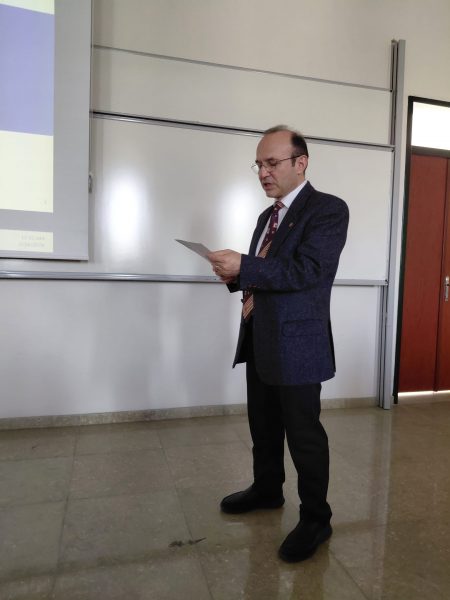
Ercan E. Kuruoğlu received his PhD degree in Information Engineering from the University of Cambridge, UK in 1998. In 1998, he joined Xerox Research Center Europe, Cambridge. He was an ERCIM fellow in 2000 at INRIA-Sophia Antipolis, France. In 2002, he joined ISTI-CNR (Italian National Council of Research), Pisa, Italy where he became a Chief Scientist in 2020. He was a Visiting Professor at Tsinghua-Berkeley Shenzhen Institute during 2020-2022. He is a Full Professor in Tsinghua Shenzhen International Graduate Institute since 2022. He served as an Associate Editor for the IEEE Transactions on Signal Processing and IEEE Transactions on Image Processing. He was the Editor-in-Chief of Digital Signal Processing, Elsevier between 2011-2021. He is currently co-Editor-in-Chief of Journal of the Franklin Institute. He served as a Technical co-Chair for EUSIPCO 2006 and is serving as General co-Chair for IEEE IVMSP 2026. He is the Chair of the IEEE Technical Committee on Image, Video and Multidimensional Signal Processing (2026-2027). He was a keynote speaker at ISSPA 2010, IEEE SIU 2017, MIIS 2020, IET-IRC 2023. He got the best paper awards in IEEE-SIU 2005, IEEE-CAI 2024 and IET-IRC 2025. He was an Alexander von Humboldt Fellow in Max Planck Institute for Molecular Genetics in 2013-2015. He is an academician at National Academy of Science of Turkey. He is elevated to IEEE Fellow grade for his contributions in non-Gaussian signal processing. His work was praised by Benoit Mandelbrot in one of his keynote speeches. His research interests are in the areas of statistical signal and image processing, Bayesian machine learning with applications in remote sensing, environmental sciences, telecommunications and computational biology.